
Belt tension meters
Correct belt tension extends the life of the drive
Precise belt tension measurement is essential for preventing premature bearing failure, reducing vibration and getting the most out of the drive system. Digital frequency meters analyse the oscillation of the belt: a non-contact sensor captures the vibration frequency and converts it into a tensioning force in newtons (N). This method delivers highly repeatable measurements and eliminates the errors of subjective, deflection-based tension estimates.
The instruments handle all common belt types, including V-belts, timing belts and ribbed profiles, regardless of their construction or length. A rugged industrial design ensures reliable operation in demanding environments, while compact measuring heads give access to hard-to-reach points in drive assemblies.
Product range
- optical meters with a laser sensor,
- acoustic meters with a microphone probe,
- versions for V-belts, timing belts and ribbed belts,
- compact measuring heads for confined spaces,
- measurement storage and data transfer,
- kits supplied in carrying cases.
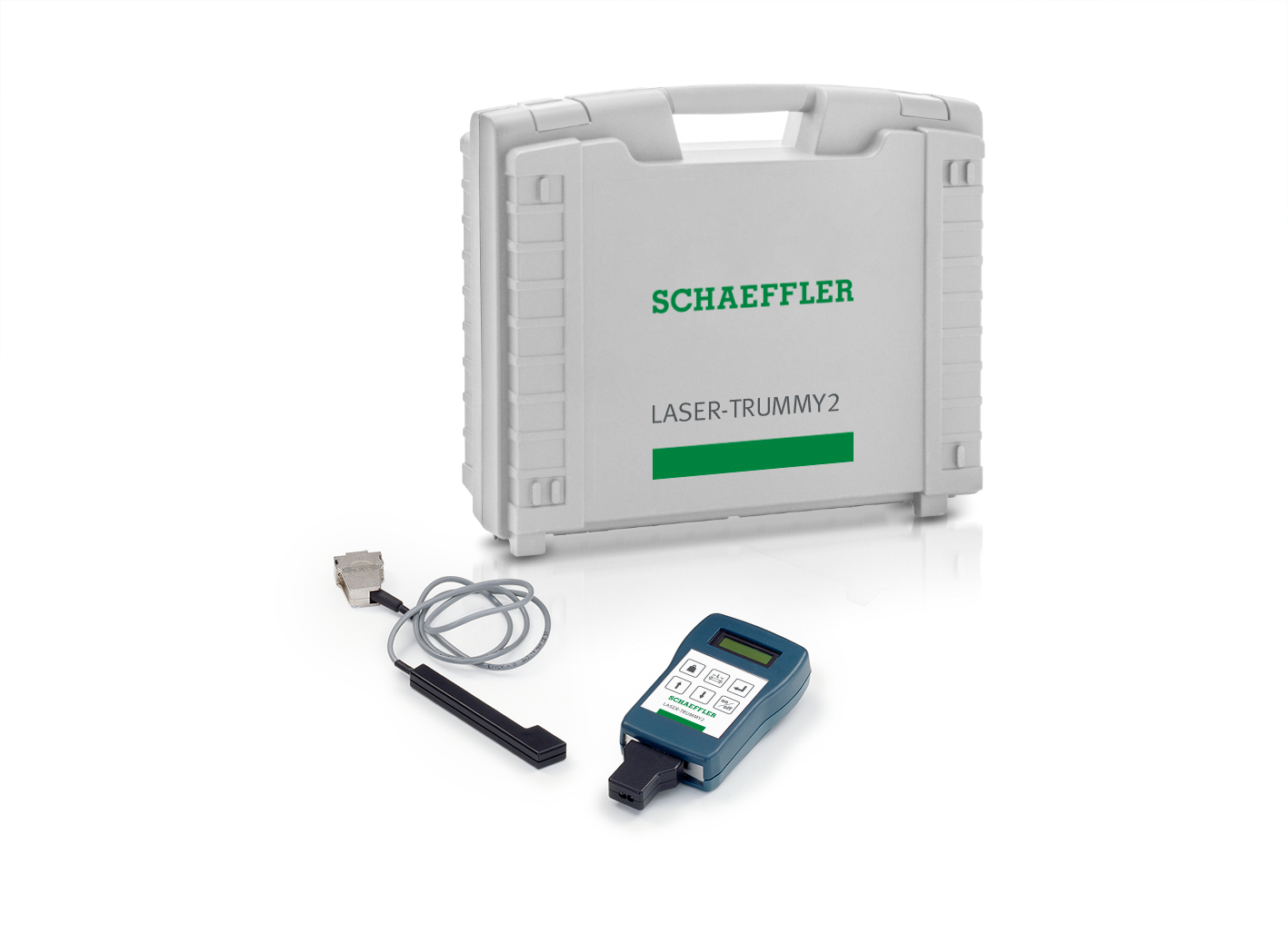
LASER-TRUMMY2 — optical measurement
LASER-TRUMMY2 captures the oscillation of the belt with an optical sensor on a cable, aimed at a free span of the belt. After the belt is briefly plucked, the instrument measures its natural frequency and converts it into a tensioning force using the entered belt data.
The measurement is non-contact and repeatable, and it also works where an acoustic probe would not give a reliable result because of plant noise.
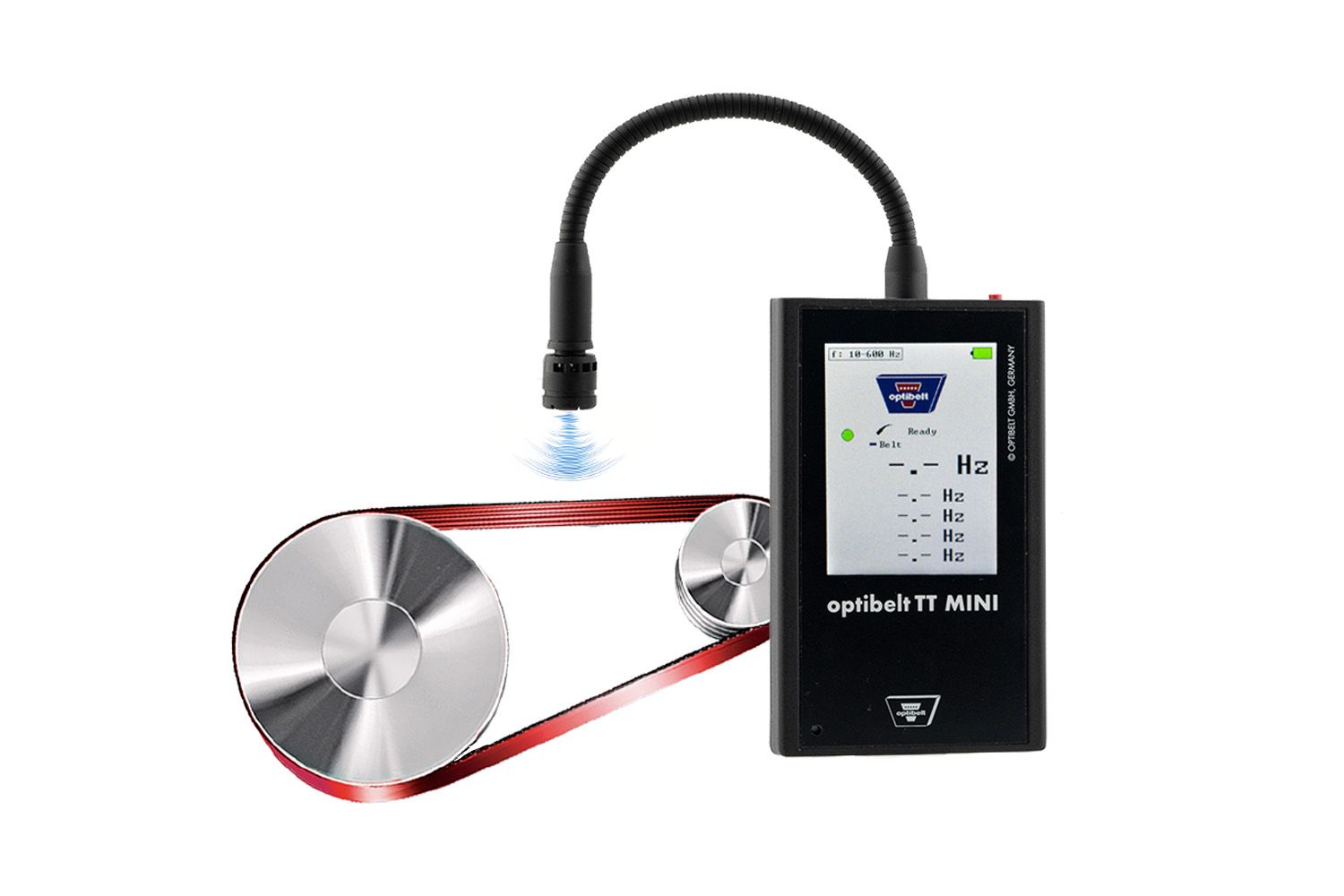
optibelt TT MINI — acoustic measurement
optibelt TT MINI picks up the sound of the oscillating belt with a flexible microphone probe. The device displays the measured frequency in hertz, which is compared with the value recommended in the belt manufacturer's data.
Its compact body and flexible probe neck allow measurement inside drive guards too, where free access to the belt is limited.
Advantages of measuring belt tension
- a repeatable, numerical result,
- an end to judging tension by feel,
- less vibration and quieter drive operation,
- longer service life of belts and bearings,
- less belt slip and overheating,
- lower energy consumption of the drive train.