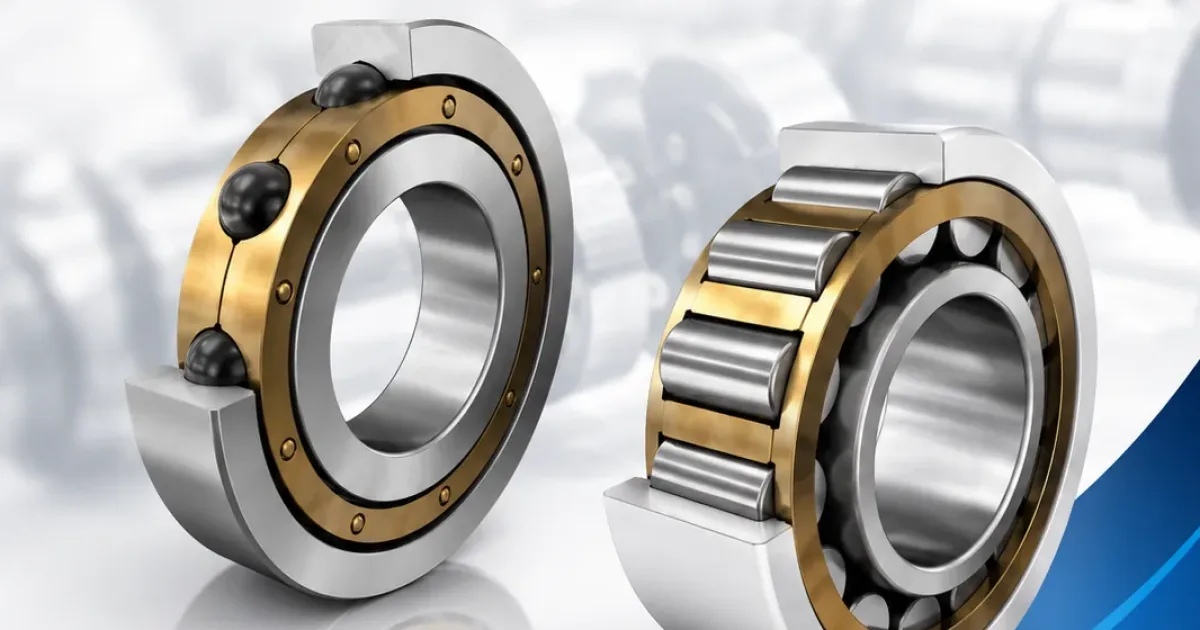
Current Isolated Bearings
Did you know that electrical current can destroy your bearing – before you notice any signs of wear?
In electric motors and generators, particularly those driven by variable frequency drives (VFDs), three types of unwanted electrical currents can pass through the bearings:
circulating currents – caused by magnetic asymmetries and high-frequency currents through the stator insulation,
discharge currents – caused by voltage between the shaft and housing, typically occurring in smaller motors,
rotor grounding currents – resulting from inadequate grounding in larger stationary machines.
What does this mean for your bearing?
The current “jumps” across the thin lubricant film, melting microscopic craters into the raceways and rolling elements. Over time, these craters develop into a characteristic pattern known as “fluting” – periodic grooves that increase vibration and lead to premature, often unexpected bearing failure. In addition, electrical current accelerates the degradation of the lubricant itself. The result is unplanned downtime, additional repair costs and production stoppages – costs that are significantly higher compared with selecting the right bearing already at the design stage.
The solution is electrically insulated bearings:
Ceramic-coated bearings (Insutect A) – an oxide ceramic layer applied to the inner or outer ring using a plasma spraying process. The external dimensions remain identical to those of standard bearings (DIN 616 / ISO 15), allowing for easy replacement without design modifications.
Hybrid bearings – ceramic rolling elements completely prevent the conductive path for electrical current. In addition to exceptional electrical resistance, they offer lower friction, higher permissible speeds, longer lubricant life and lower CO₂ emissions due to reduced energy consumption.
The right choice depends on the motor type, operating conditions and type of converter. We therefore recommend professional advice when selecting the optimal solution for your specific application.
Contact us for advice on how to protect your motors and generators from electrical current damage.